
ANALYSIS
six nations
Published 16 March 2026



Ireland know they need to kill this game off. Scotland’s tails are suddenly up. The visitors have closed to within five points at 26-21 and there is more than enough time left to pull off a comeback win.
With the Triple Crown on the line, someone needs to make a big play. Up steps Darragh Murray.
Darragh Murray blockdown
66:44
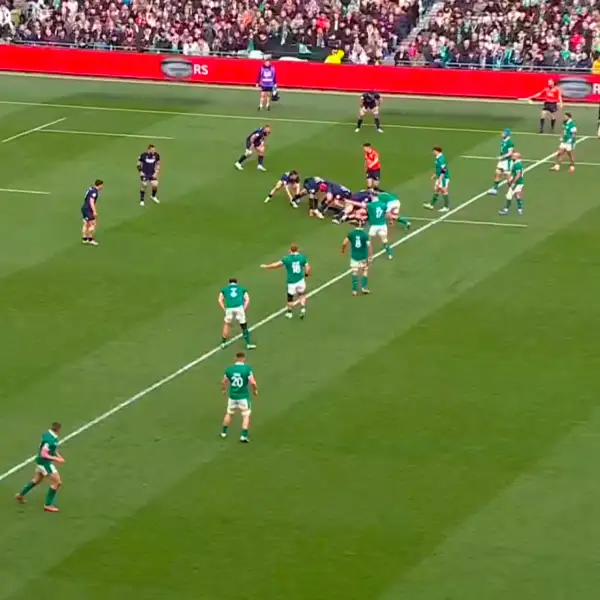
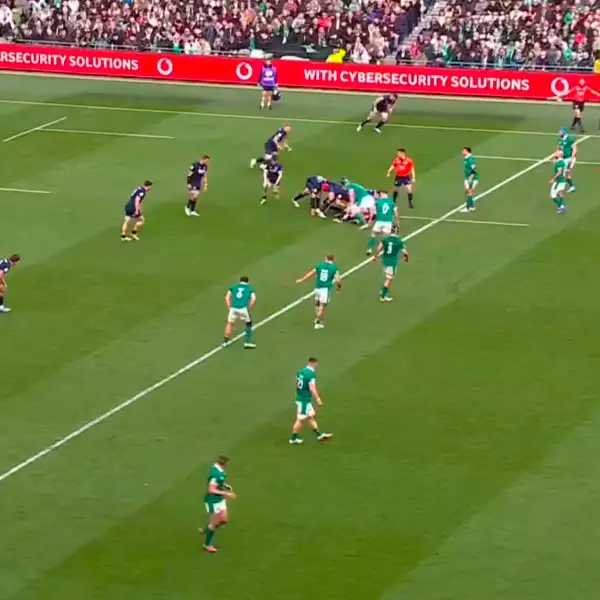
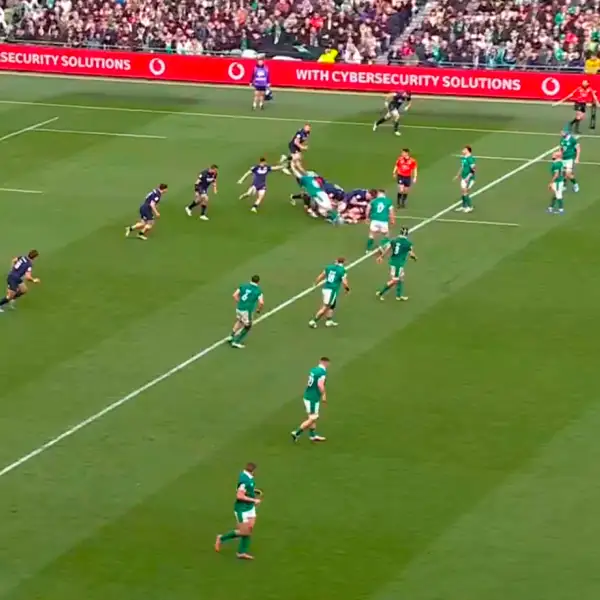
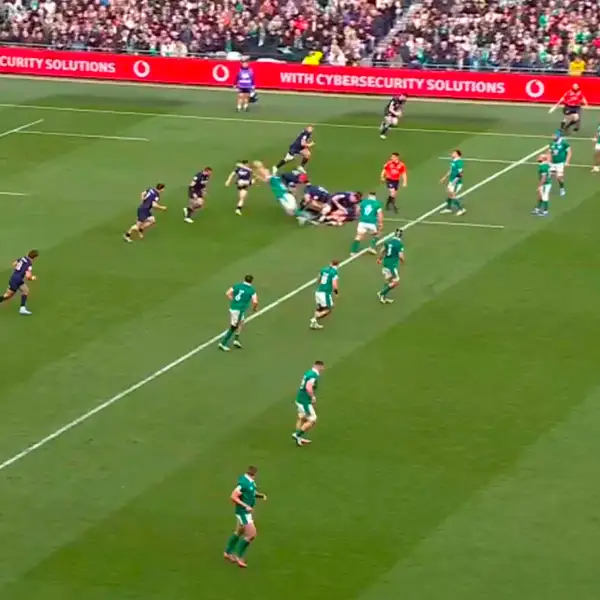
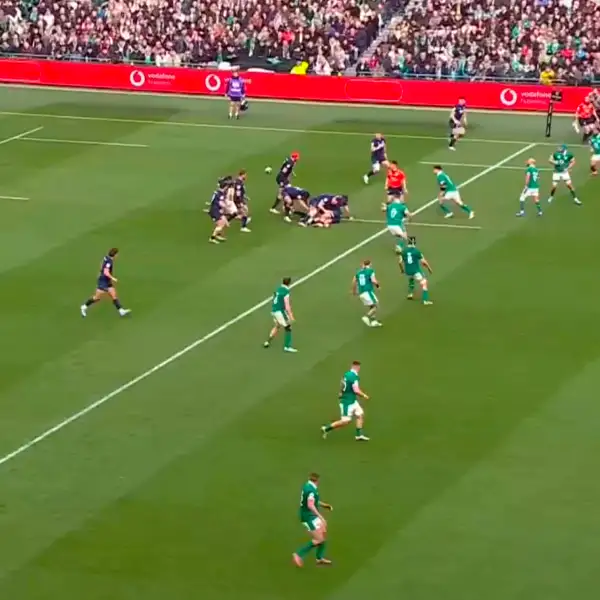
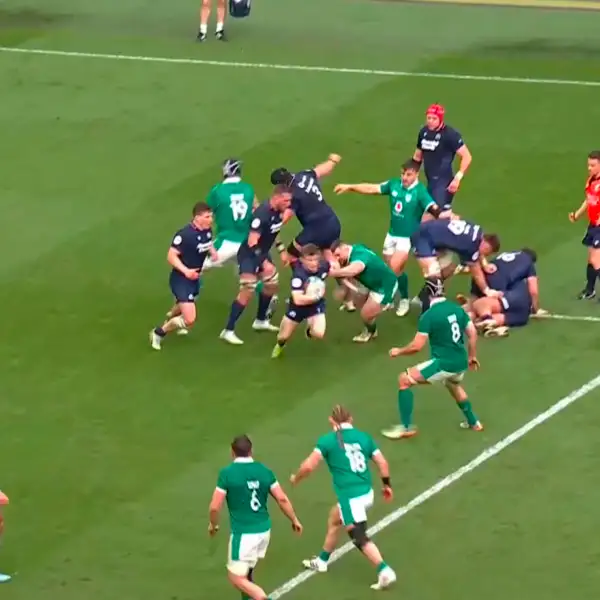
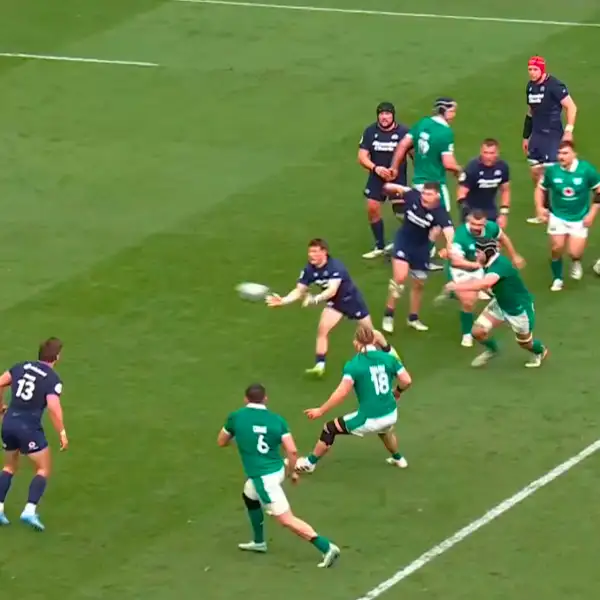
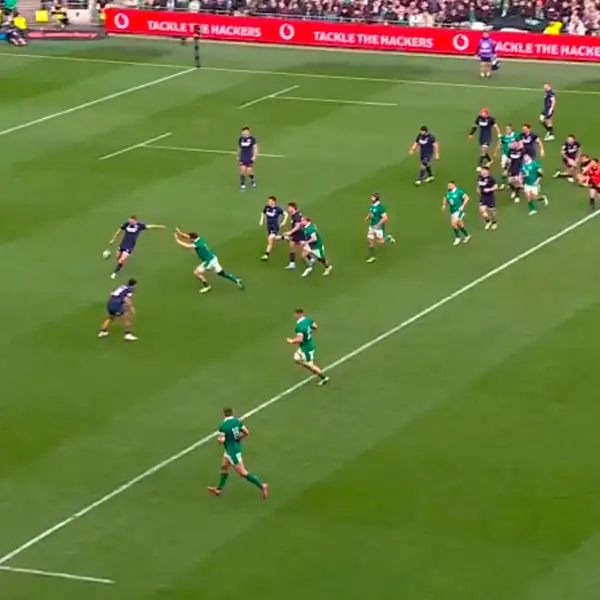
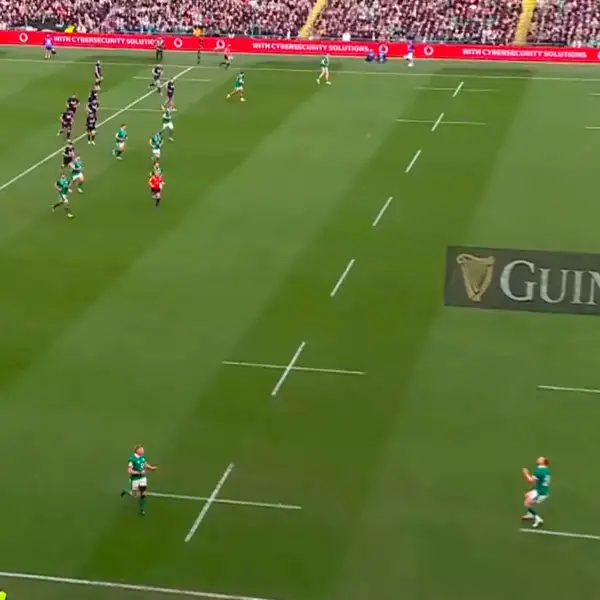
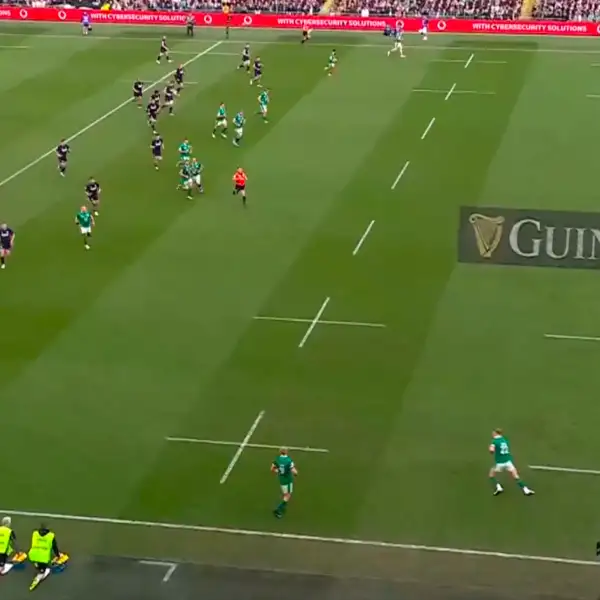
Horne sets up to box kick out of Scotland’s 22. Murray nails his timing to charge Horne’s kicking foot. The towering Roscommon man explodes forward and uses every inch of his height to pull off a blockdown that leaves Scotland scrambling.
Finn Russell’s rushed clearance lands into the welcoming arms of Ciarán Frawley, who instantly counters. Forty-eight seconds later, Tommy O’Brien dots down Ireland’s fifth try and that’s game over.
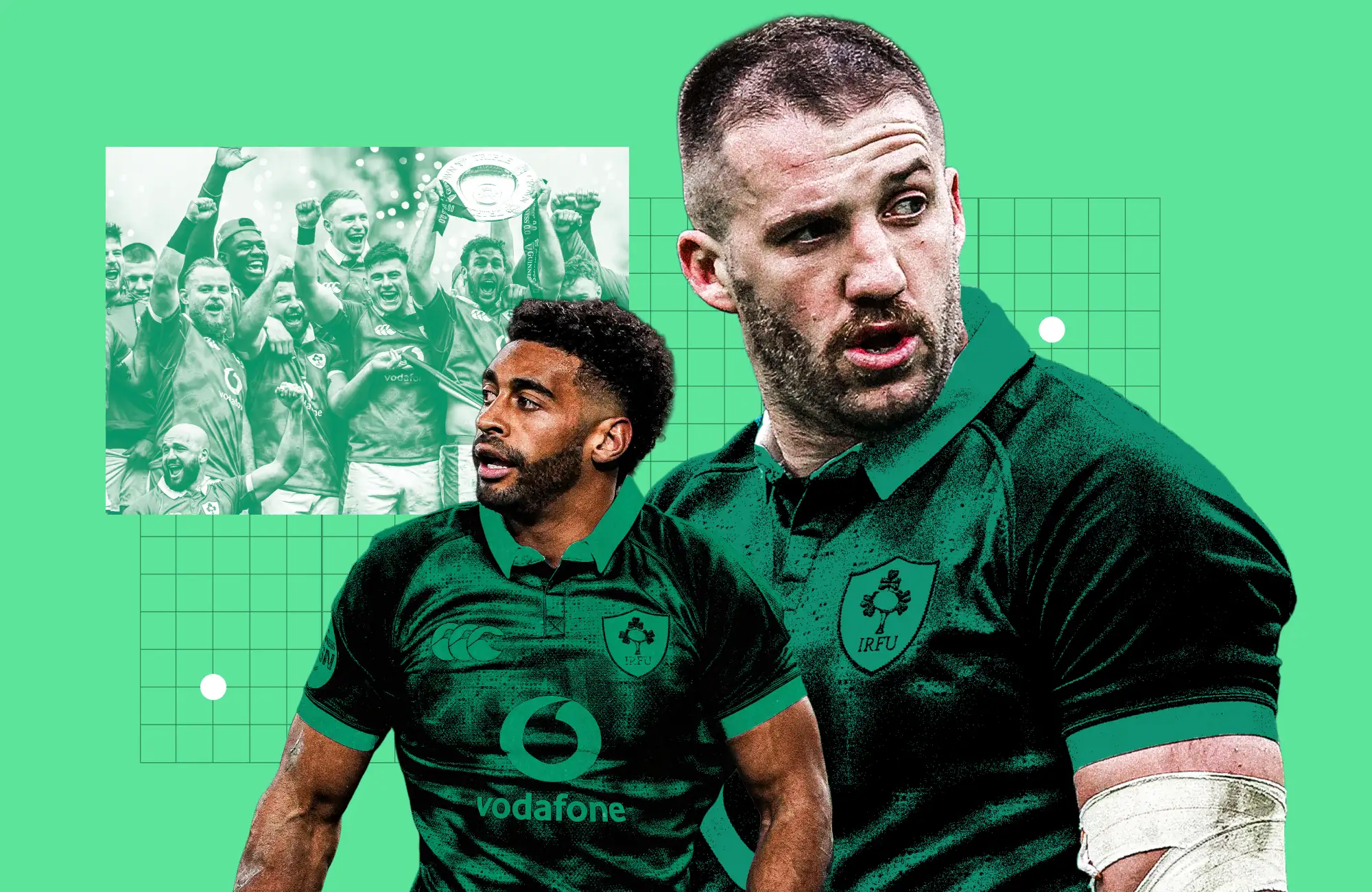
The blockdown effort from Murray, combined with the execution, is symbolic of how Ireland played in this Triple Crown clincher. And it was fitting that in a Six Nations when Andy Farrell’s team were missing key men due to injuries, an unheralded player like Murray made an impact at a key moment.
Though Ireland were clearly the better team in Dublin on Saturday, they well and truly had to dig in.
In fact, the whopping tally of 227 tackles against Scotland was the most tackles Ireland have ever had to make in a game in the Six Nations era, which started in 2000.
Despite only playing 53 minutes, Josh van der Flier was Ireland’s top tackler with 23, while Tom O’Toole made 20, and Joe McCarthy, Tadhg Beirne, and Caelan Doris weren’t far behind on 18 each. Jack Crowley led the backs with 10 tackles.
The ball-in-play time on Saturday was a lung-busting 43 minutes and 13 seconds, which is the highest of any game in this year’s Six Nations. So both sides had serious questions asked of their fitness and their willingness to stay in the fight during long passages of play.
“They kept banging the door down the whole time, but I thought we had a ruthless edge to us in how we defended.”
Although Scotland scored three tries, Farrell’s side consistently had the ability to win crucial turnovers that stemmed the tide.
Two breakdown turnovers from Tom O’Toole and Tadhg Beirne in the space of three minutes inside the Irish 22 in the first half proved to be pivotal, ensuring Ireland held their 19-7 lead into half time.
Beirne always leads the charge in this regard.
Tadhg Beirne turnover
30:36
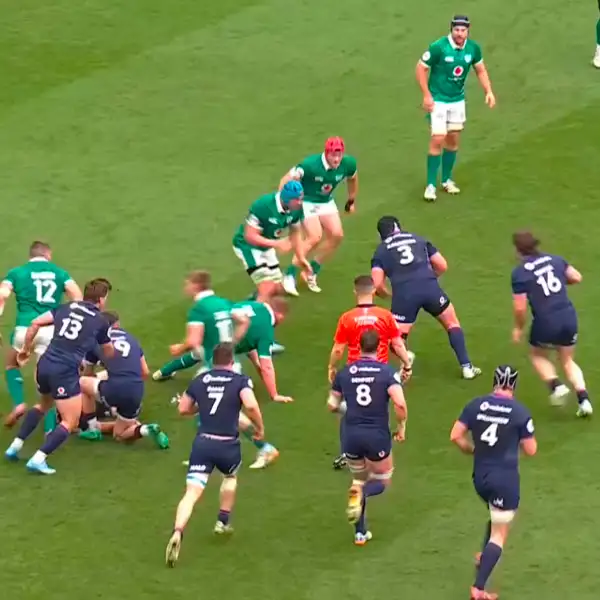
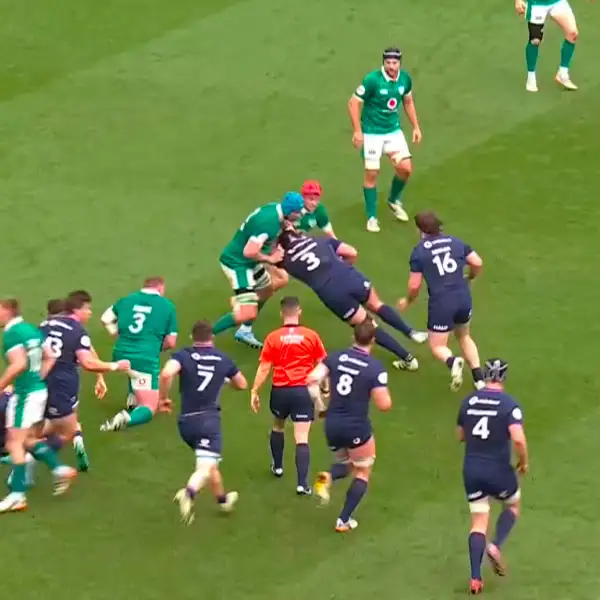
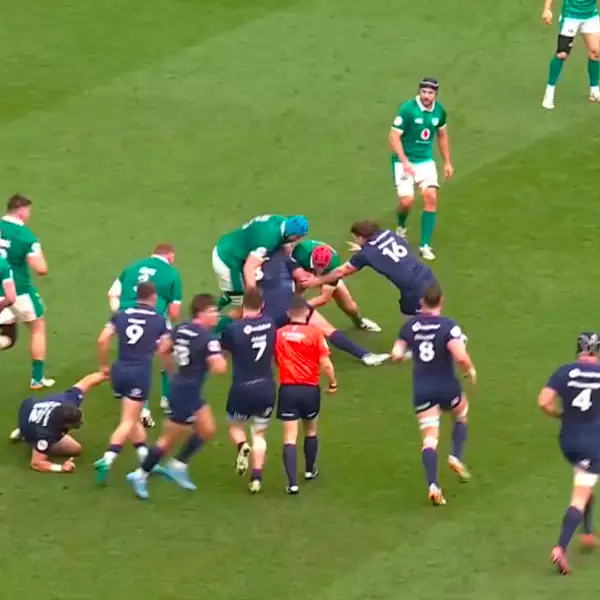
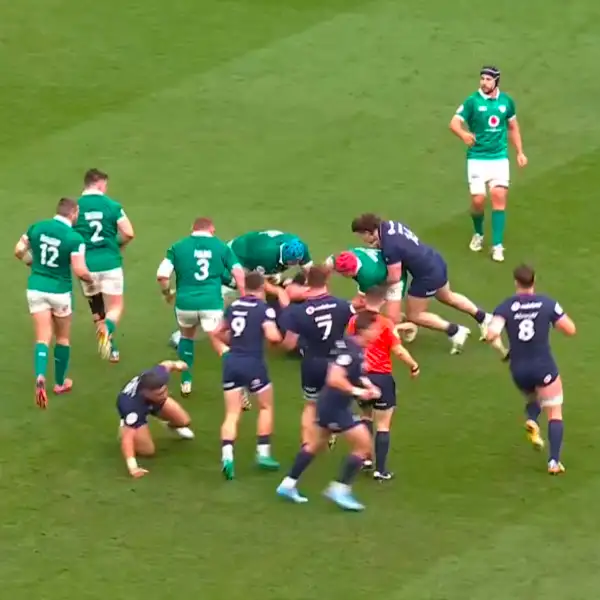
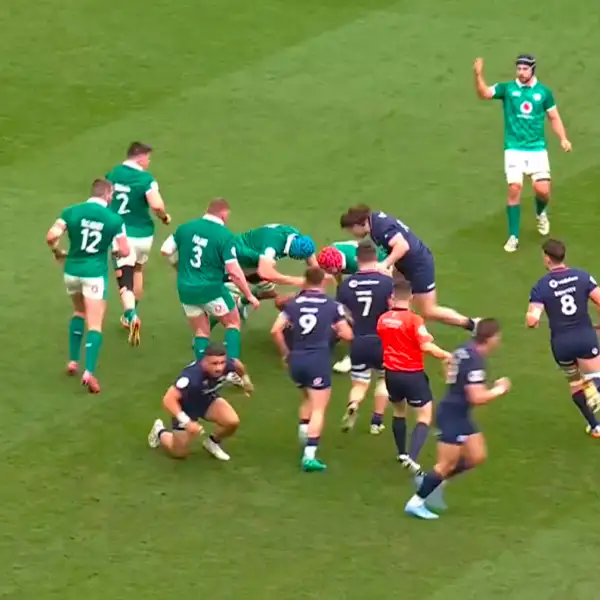
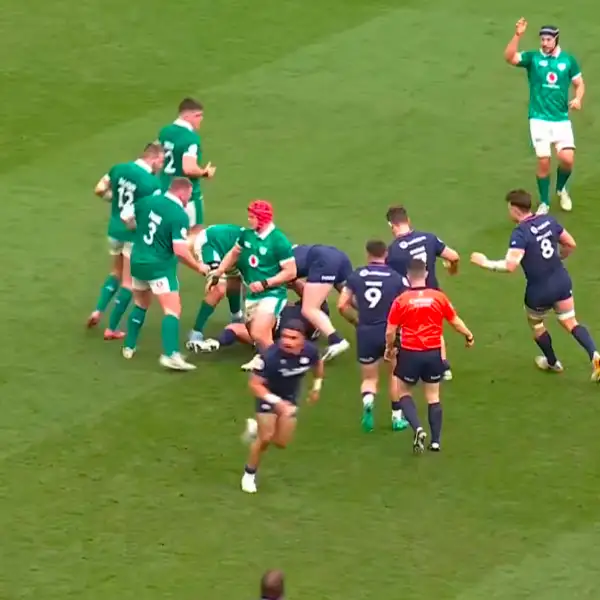
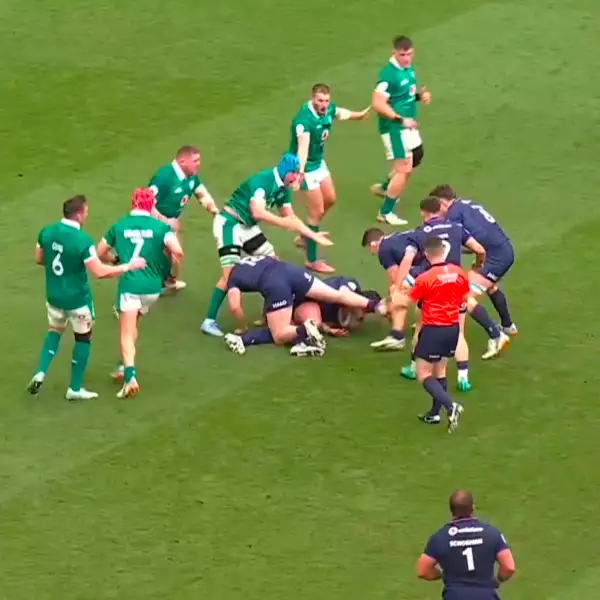
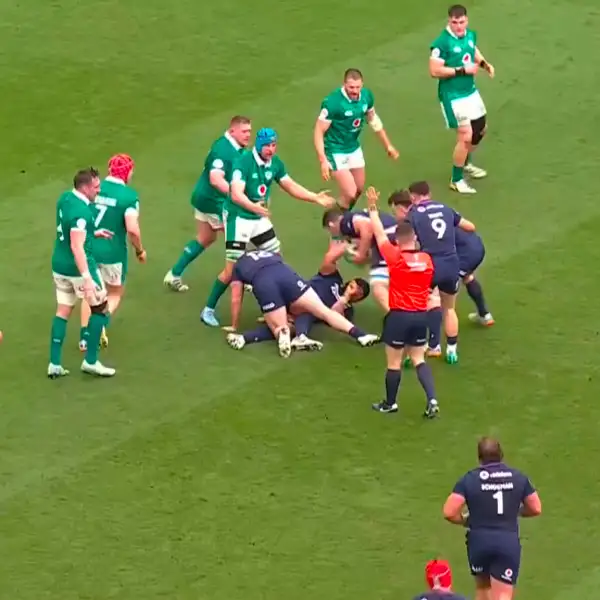
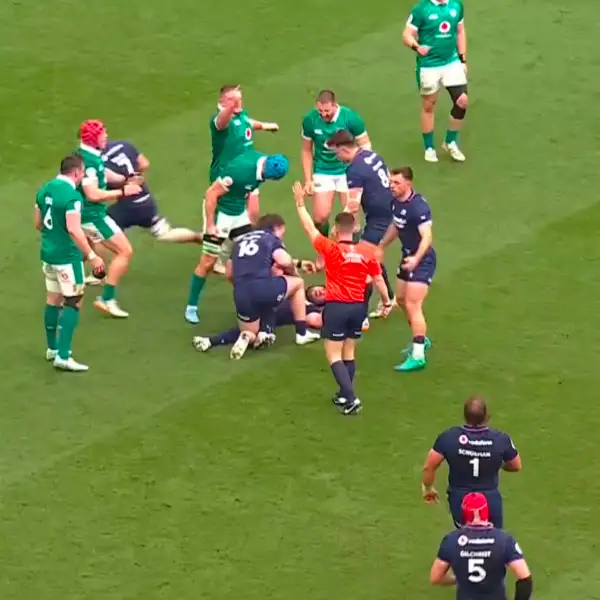
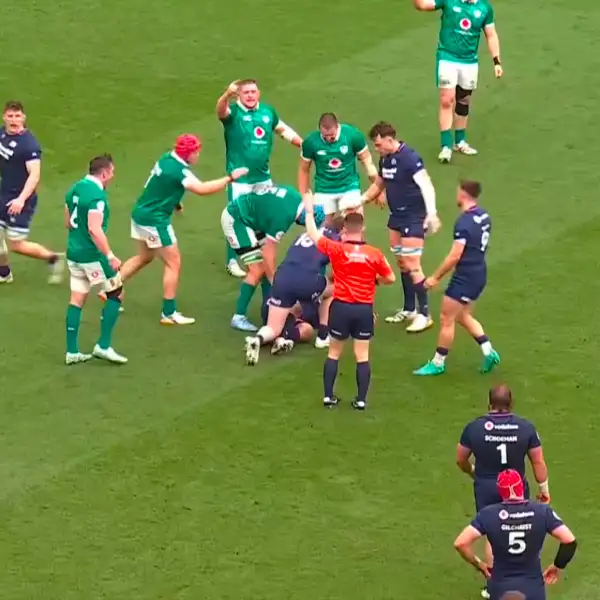
Watch how Josh van der Flier assists in the tackle with Beirne, but also creates space for Beirne by briefly impeding Ewan Ashman’s arrival to clearout. Beirne is in position to poach, Zander Fagerson adds an extra roll, and Ireland get the penalty.
“Tadhg Beirne was immense.”
There was nice variety to the way Ireland won turnovers in this game. Stuart McCloskey had an early tackle turnover on Russell, Joe McCarthy won a muscular maul turnover, O’Toole had his breakdown poach close to the Irish tryline, and McCarthy earned a lineout steal.
Jamison Gibson-Park stripped Russell in a choke tackle with O’Toole, Beirne had another clean breakdown pilfer, and Nick Timoney almost fought Beirne for the final turnover near the Irish line in the 77th minute.
Each and every one of them sickened the Scots, while the breakdown efforts were ferocious even when Ireland didn’t win the ball. Farrell’s men had a huge tally of 163 opposition ruck arrivals on Saturday.
As well as denying Scotland more chances to score tries with their defensive might, Ireland were ruthless in attack on Saturday.
They had set a high bar in this area with their five-try win over England at Twickenham, but the Irish attack was even more lethal against Scotland.
Their return of 4.78 points per 22 entry in this win over the Scots is the third-best return from Ireland against top-tier opposition in the Farrell era.
Ireland set a clinical tone in just the third minute against the Scots, as they struck for Jamie Osborne’s try.
Jamie Osborne try
02:42
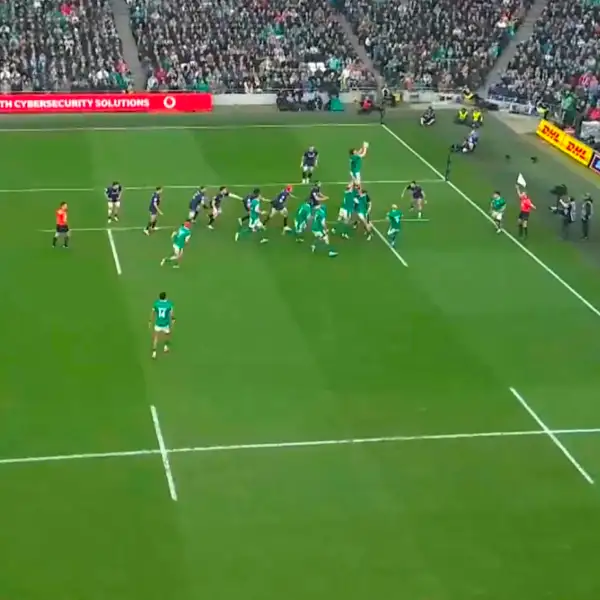

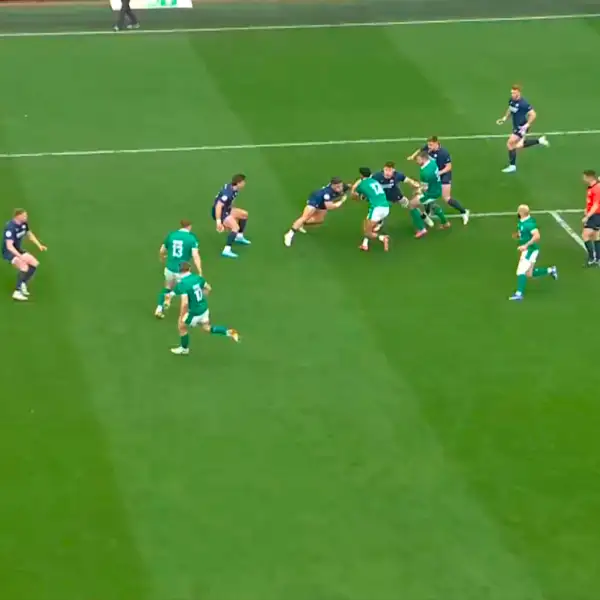
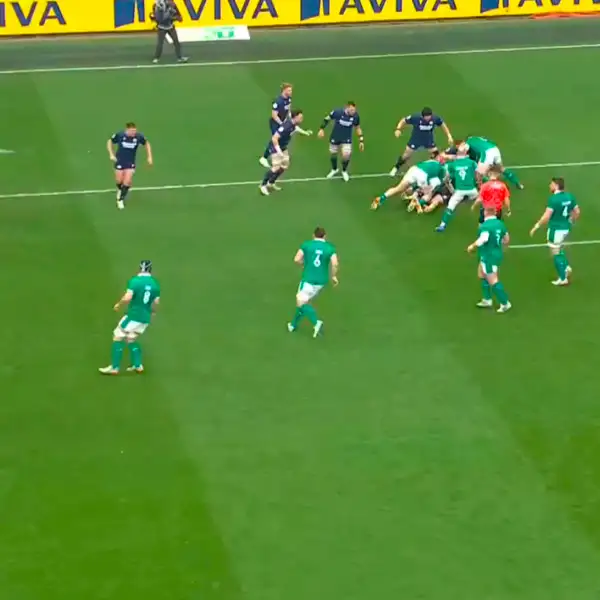
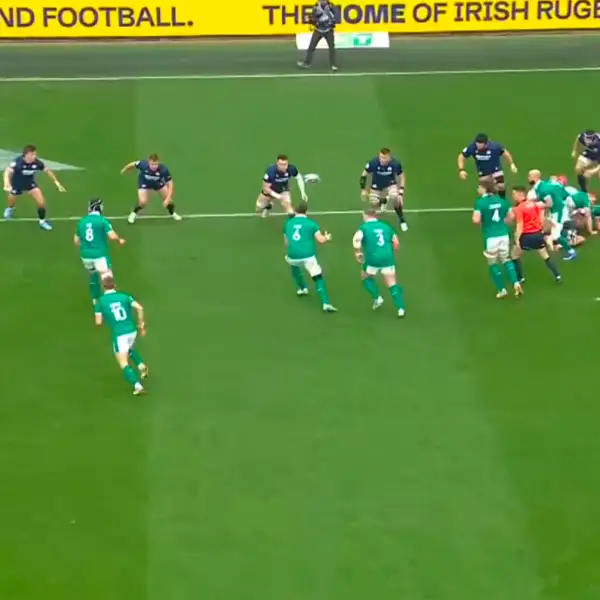
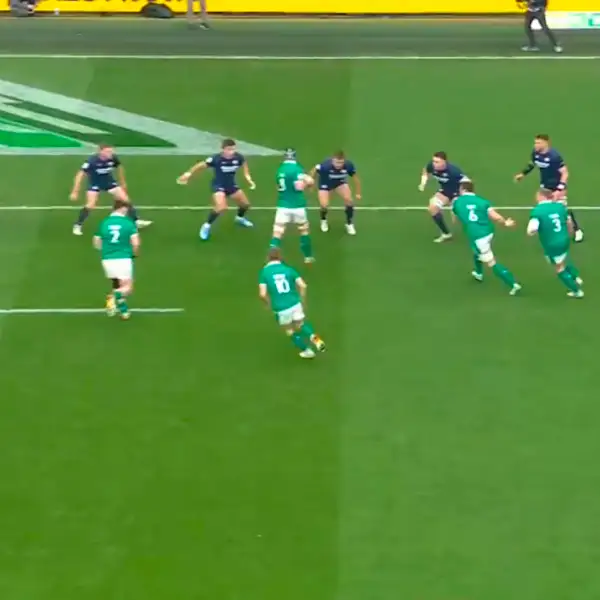
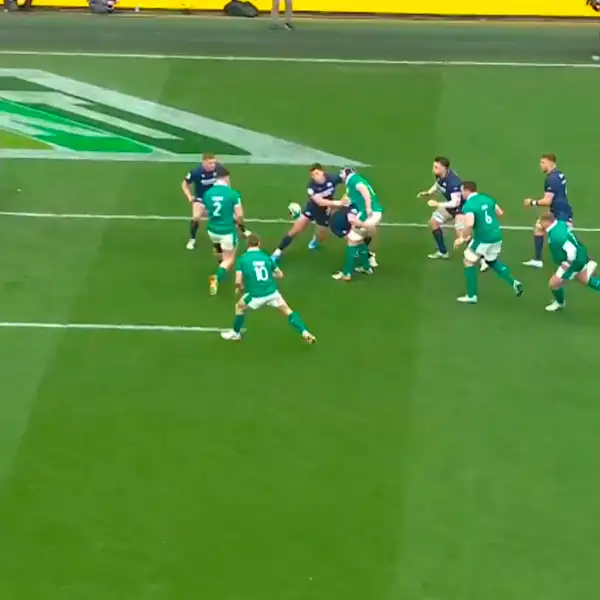
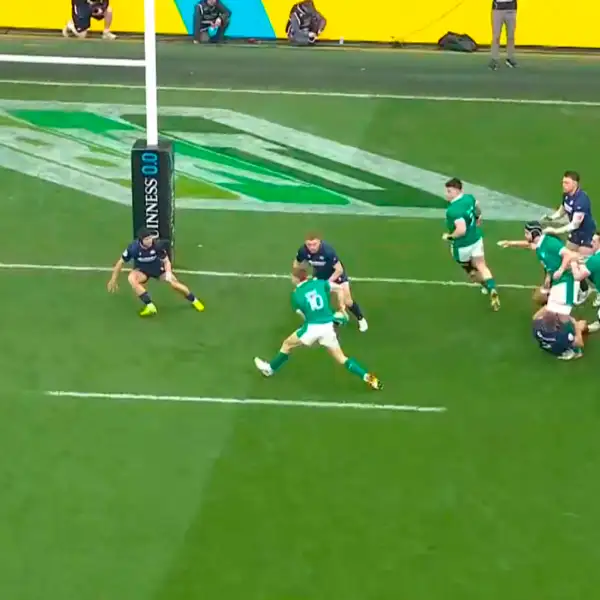
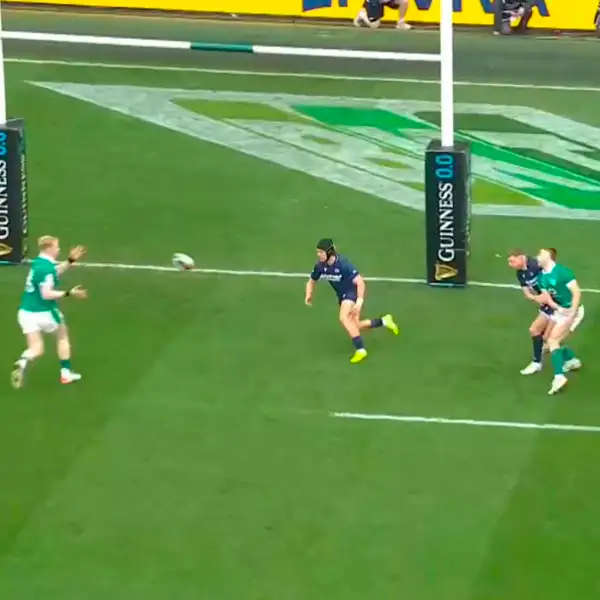
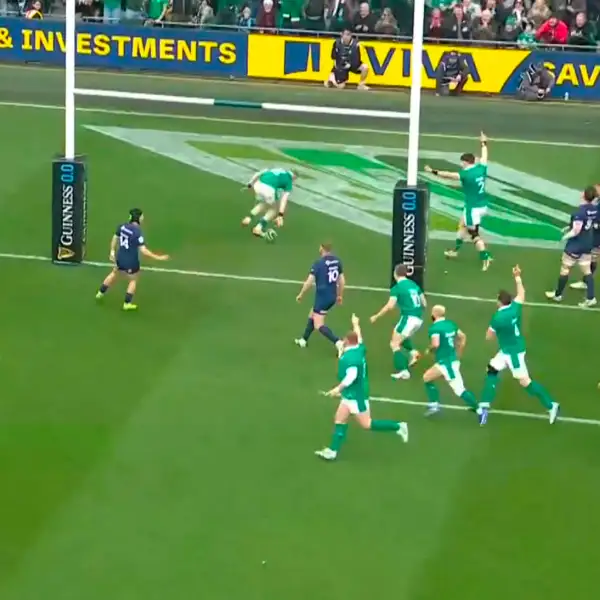
Scotland expect a maul, but Ireland play off the top. Baloucoune carries, then it looks like Conan will, only for Gibson-Park to fizz the ball to Doris, who has Sheehan running short outside. Scotland condense, Doris sweeps out the back, and Crowley sends Osborne over.
This Osborne try comes from a clean Ireland lineout take on a day when the set-piece was impressive.
O’Toole’s scrum penalty allowed Ireland to kick into the corner, and then they struck from the lineout for Osborne’s score. Rob Baloucoune’s first-half try came on first phase from a rock-solid Irish scrum.
Ireland’s second try through Dan Sheehan also came from a five-metre lineout, with the hooker timing his dart off the maul beautifully. Paul O’Connell’s pack won all 10 of their own lineout throws against the Scots for a satisfying 100% return, capping off a strong Six Nations in this area.
Ireland’s overall lineout success of 94.7% was second only to England’s 94.9%.
Despite McCarthy’s lineout steal against the Scots, O’Connell’s pack didn’t have much success in the air on the opposition throw in this Six Nations.
Instead, they seemed to focus more heavily on their maul defence on the ground and this was another highlight of the win that sealed the Triple Crown.
“Paulie is a fantastic lineout coach. I know he got the brunt of abuse over the last few years from everyone else, but he is an unbelievable coach with the detail that he puts into the lineout.”
Throw in Ireland’s excellent discipline – with only seven penalties conceded – and this was a comprehensive performance to claim silverware.
It was a happy finale to a campaign that started with woe in Paris, and it was fitting that the final act involved a sixth assist of the championship from Ireland’s outstanding player in this Six Nations.
Tommy O’Brien try
79:30
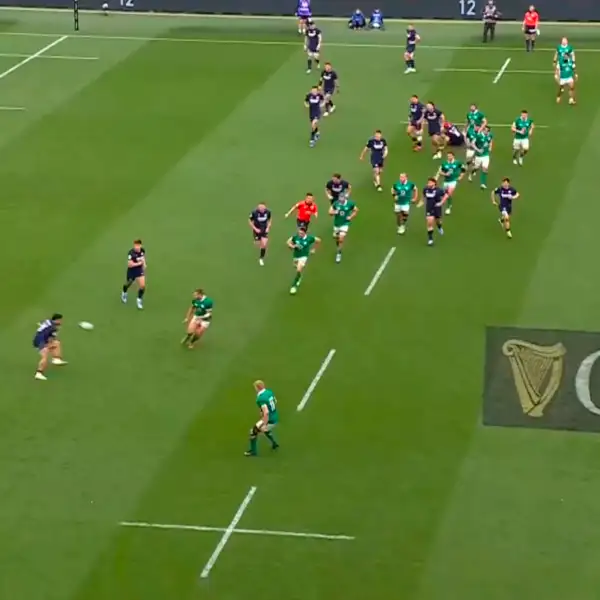
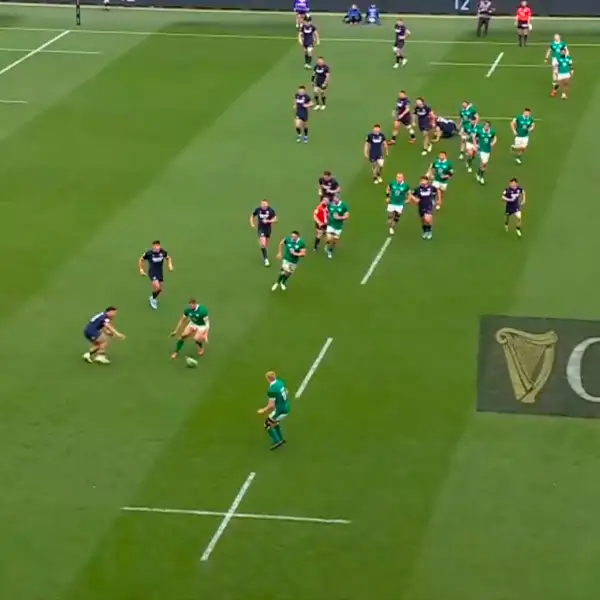
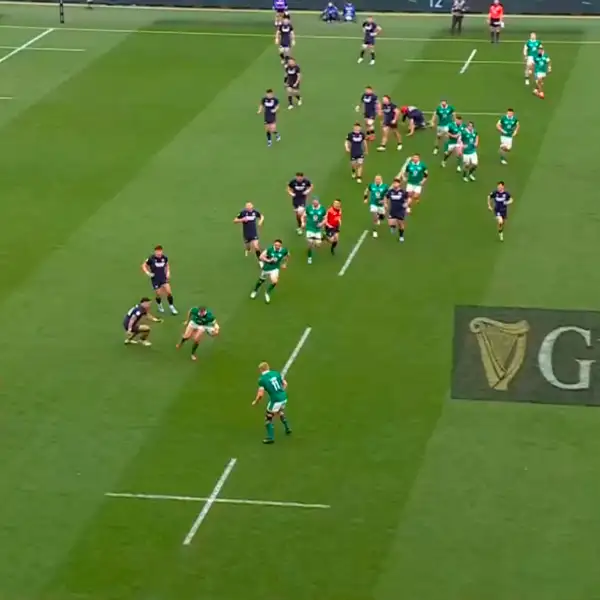
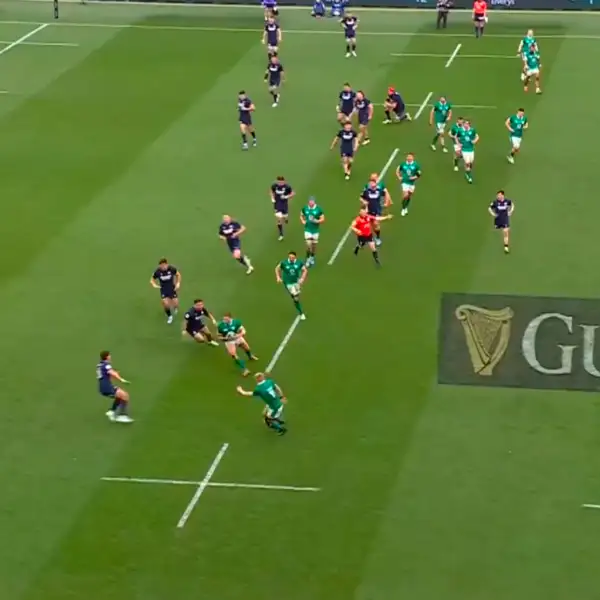
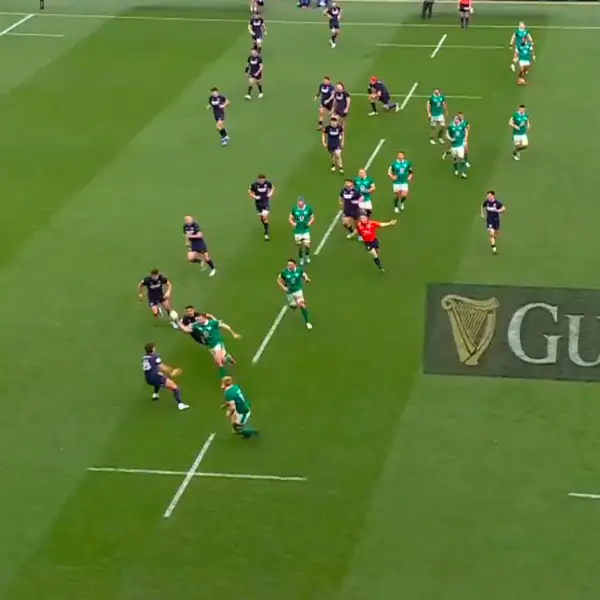
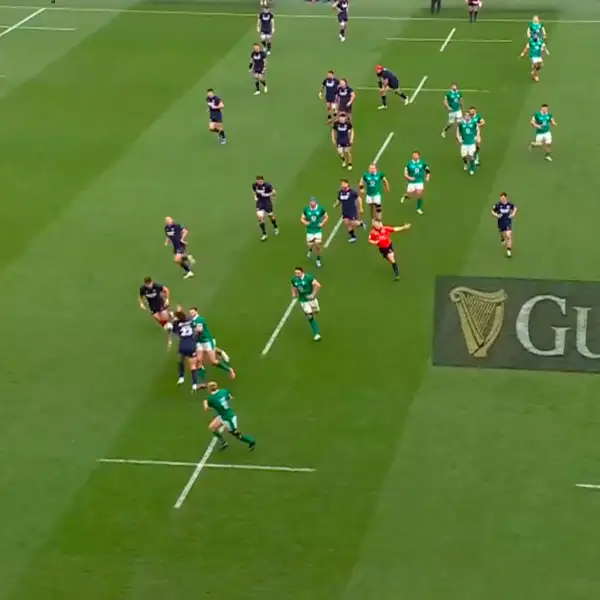
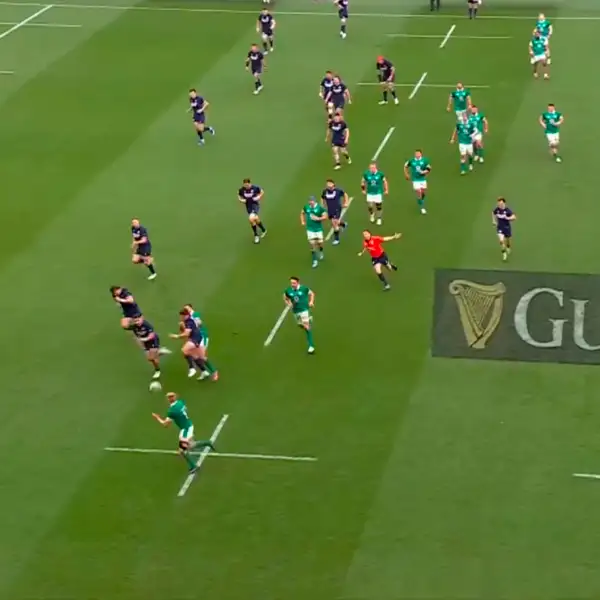
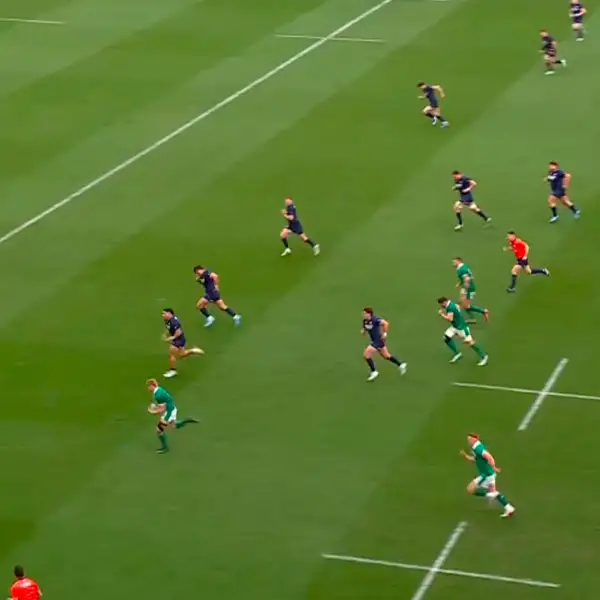
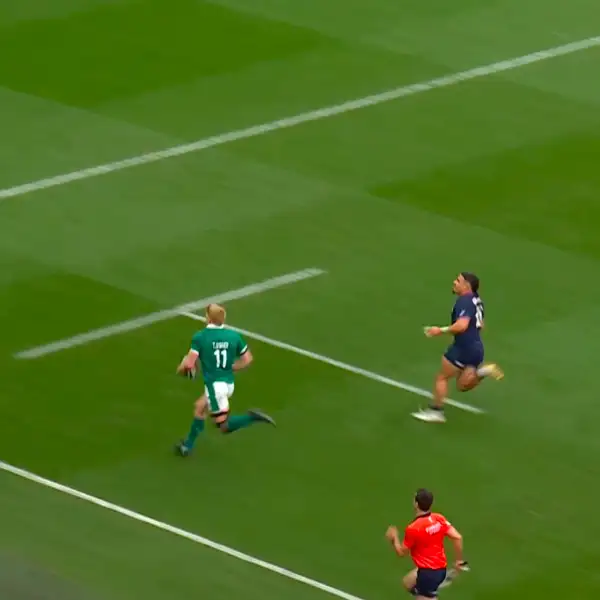
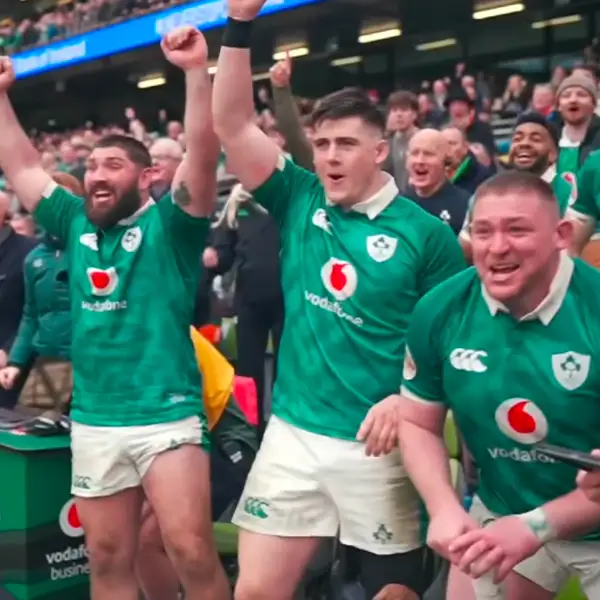
Scotland knock on and McCloskey reacts with typical decisiveness as he gathers the ball and almost instantly gets it into his right hand, lifting a basketball pass up over Tom Jordan to speed man O’Brien. The celebrations well and truly kick off.
“To perform consistently to that higher level is amazing, and it's all because he's playing in a squad that's unbelievably close and connected to one another.”
Ireland will carry the pain of their opening-night defeat to France with them, not because of the result but because they felt they lacked the mentality and physicality that have so rarely been missing in Farrell's team. However, the response to that setback has undoubtedly been impressive. They put it all together beautifully against Scotland to claim silverware.
Ireland know they're not the finished article. Winning the 2027 World Cup is their ultimate goal. Next up, we can look forward to Farrell's men targeting a win against the Wallabies on Aussie soil in July, as well as aiming for a first-ever victory over the All Blacks at the famous Eden Park. Bring it on.
Author
Murray Kinsella
Editor
Niall Kelly
Design & Development
Jordan Huysmans & Niall O’Shea
Real Rugby Fans Need Real Analysis
The 42 is the definitive voice on Irish sport. Our experts break down the game's defining moments and make sense of the biggest stories in easy-to-follow formats.
A subscription unlocks every article and every podcast from Murray Kinsella and our entire award-winning team.
suBSCRIBE TO the 42
